

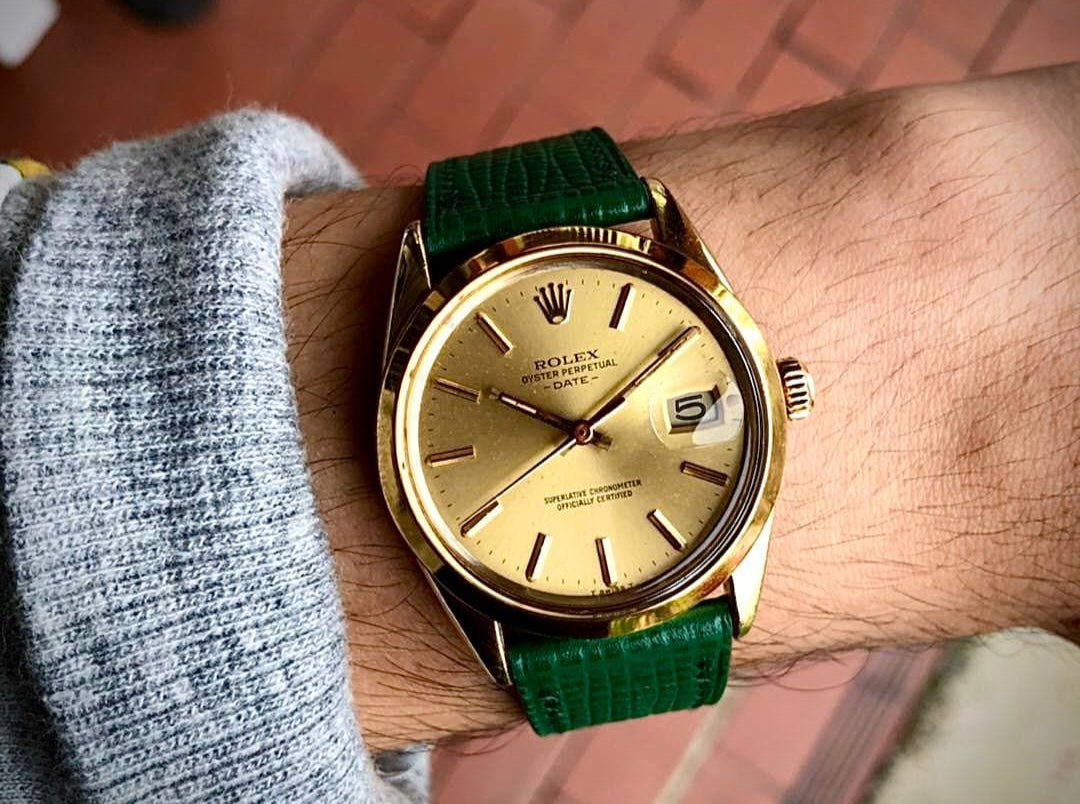
Leather watch straps at AugLeather
Handcrafted in Vietnam · Made-to-order


The strap changes everything. Same watch, different strap, completely different feel. Leather whispers tradition. Metal shouts durability. One molds to your wrist over time. The other stays exactly as it was on day one.
Choosing between them is not about which is better. It is about which is better for you.
The Quick Comparison
| Feature | Leather Straps | Metal Straps |
|---|---|---|
| Cost | Generally less expensive | Often more expensive |
| Durability | Prone to scratches and fading | Highly durable but can dent |
| Maintenance | Requires regular conditioning | Occasional cleaning only |
| Style | Classic, casual, versatile | Modern, formal, bold |
| Water Resistance | Avoid water exposure | Highly water-resistant |
| Comfort | Softens and molds to wrist | Heavier, temperature-sensitive |
| Lifespan | 2-5 years with care | 10+ years |
Leather Straps: Classic Comfort
Leather straps have adorned wrists for centuries. They carry a warmth and character that metal cannot replicate. Each strap tells a story through its patina, the natural darkening and softening that happens with wear.
Why Choose Leather
Comfort that improves with time
- New leather feels stiff for a few days
- Gradually softens and conforms to your wrist shape
- Creates a personalized fit unique to you
- Lightweight feel you barely notice
Versatile styling
- Works with casual jeans and t-shirts
- Pairs elegantly with business suits
- Transitions from office to evening effortlessly
- Available in dozens of colors and textures
Develops character
- Natural patina forms over months and years
- Scratches and marks add personality
- No two straps age exactly the same
- Becomes a personal artifact of your journeys
Affordable entry point
- Quality leather straps start around $30-50
- Easy to own multiple colors and styles
- Simple to swap for different occasions
- Lower initial investment than metal
Drawbacks to Consider
Water vulnerability
- Absorbs moisture quickly
- Can warp, stain, or develop odor if wet
- Must remove before swimming or showering
- Humidity can make leather sticky against skin
Maintenance requirements
- Needs cleaning every few weeks
- Requires conditioning every 2-3 months
- Can crack if allowed to dry out
- Demands more attention than metal
Finite lifespan
- Daily wear means replacement every 2-5 years
- Sweat and oils gradually break down fibers
- Sunlight fades colors over time
- Eventually shows wear no matter how well you care for it
Metal Straps: Built to Last
Metal bracelets bring a different energy. They feel substantial. They catch light differently. They suggest precision engineering and modern sophistication.
Why Choose Metal
Exceptional durability
- Stainless steel resists scratches and impacts
- Titanium offers strength with lighter weight
- No degradation from sweat or oils
- Can last decades with minimal care
Water-friendly
- Swim, shower, sweat without worry
- Ideal for sports and outdoor activities
- Diving watches almost always use metal
- Rinses clean after exposure to salt or chlorine
Low maintenance
- Occasional wipe with a cloth restores shine
- No conditioning or special treatments needed
- Links adjust for perfect fit
- Looks the same on day 1,000 as day 1
Modern aesthetic
- Suggests technical precision
- Pairs well with contemporary fashion
- Brushed or polished finishes available
- Two-tone options mix metals for versatility
Drawbacks to Consider
Temperature sensitivity
- Feels cold against skin in winter
- Can get uncomfortably hot in summer sun
- Traps sweat against wrist in heat
- Heavier than leather, noticeable during long wear
Higher cost
- Quality metal bracelets start around $100+
- More complex manufacturing process
- Adjusting links often requires special tools
- Replacement is expensive if damaged
Potential for damage
- Hard impacts can dent or deform links
- Deep scratches are difficult to remove
- Can catch on sleeves or desk edges
- Shows fingerprints and smudges easily
Comfort Comparison
Leather comfort factors:
- Soft and warm against skin
- Breathes better than metal
- Molds to wrist contours
- Lightweight for all-day wear
- Can feel sticky in humidity
Metal comfort factors:
- Solid, secure feeling
- Smooth interior links
- Adjustable for precise fit
- Heavier weight some find reassuring
- Temperature extremes affect feel
Style Considerations
When leather works best:
- Business formal settings
- Vintage or heritage-inspired watches
- Warm weather climates
- Those who prefer understated elegance
- People who enjoy watching materials age
When metal works best:
- Sports and tool watches
- Modern minimalist aesthetics
- Active lifestyles
- Cold weather climates
- Those who want zero maintenance
Making Your Decision
Ask yourself these questions:
How active is your lifestyle?
- Desk job and dinners: Leather works beautifully
- Gym, pool, outdoors: Metal handles it better
What is your climate?
- Hot and humid: Leather needs more care
- Cold winters: Metal feels chilly initially
How much maintenance will you actually do?
- Willing to condition leather quarterly: Leather rewards you
- Want to wipe and forget: Metal is your friend
What is your budget philosophy?
- Prefer lower upfront cost: Leather
- Want buy-it-for-life durability: Metal
What style speaks to you?
- Classic and warm: Leather
- Modern and technical: Metal
The Hybrid Approach
Many watch enthusiasts own both. They match the strap to the occasion:
- Leather for: Office, dinners, weekends, warm weather
- Metal for: Sports, swimming, travel, winter
Some watches feature quick-release straps, making swaps effortless. One watch body becomes two different timepieces depending on your strap choice.
Cost Over Time
Leather total cost of ownership:
- Initial strap: $40
- Replacement every 3 years: $40
- 10-year total: ~$160
Metal total cost of ownership:
- Initial bracelet: $150
- Occasional professional cleaning: $20
- 10-year total: ~$170
Over a decade, costs are surprisingly similar. Leather requires more frequent replacement. Metal requires higher upfront investment.
Caring for Each Type
Leather care routine:
- Wipe with dry cloth after each wear
- Clean with damp cloth monthly
- Apply leather conditioner quarterly
- Store away from direct sunlight
- Rotate between multiple straps
Metal care routine:
- Rinse after exposure to salt or chlorine
- Wipe with soft cloth weekly
- Deep clean with soapy water occasionally
- Dry thoroughly after getting wet
- Store in watch box or pouch
Final Thoughts
There is no wrong choice between leather and metal. Only the choice that fits your life.
Leather offers warmth, character, and classic style. It asks for a bit of care in exchange for comfort and beauty that improves with age.
Metal offers durability, water resistance, and modern sophistication. It demands little and gives back consistent performance year after year.
Consider your lifestyle, your climate, your style preferences, and your willingness to maintain your accessories. Then choose the strap that will make you happy every time you glance at your wrist.
Ready to explore both options? Browse our collection of handcrafted leather watch straps and discover how the right strap transforms your watch.
—
Make the switch to leather
- Browse leather watch straps — premium leathers, handcrafted in Vietnam.
- Leather Apple Watch bands
- Leather or Metal Watch Band? (reader perspectives)
Share:
How to Replace a Leather Watch Strap: A Step-by-Step Guide
Leather vs Silicone Watch Band: Which Material Fits Your Lifestyle